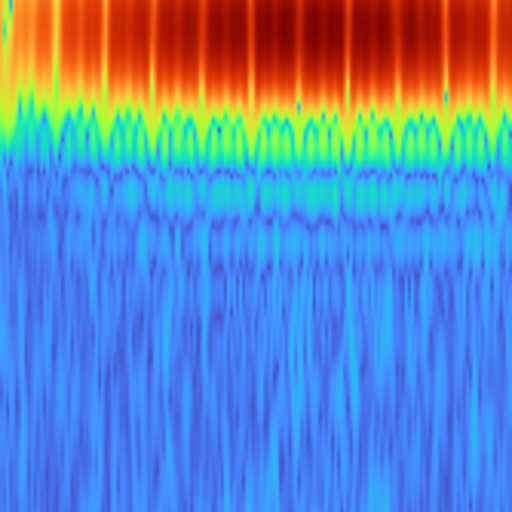
Level hover
level_v0Full quadrotor point-scatterer model; the body does not translate while its rotors keep turning.
- Tilt
- 0°
- Speed
- 0 m/s
- Points
- 25
11,249samples · 25.0%
DeepTelecom · DTUAV-V1 · v1.0.0
A reproducible simulation dataset built with Sionna RT and a moving UAV point-scatterer model, pairing NPZ tensors, micro-Doppler PNG spectrograms, and standardized JSON metadata.
Frozen revisionde7fc35c…23b3v1.0.0 verified

Dataset at a glance
Release evidence
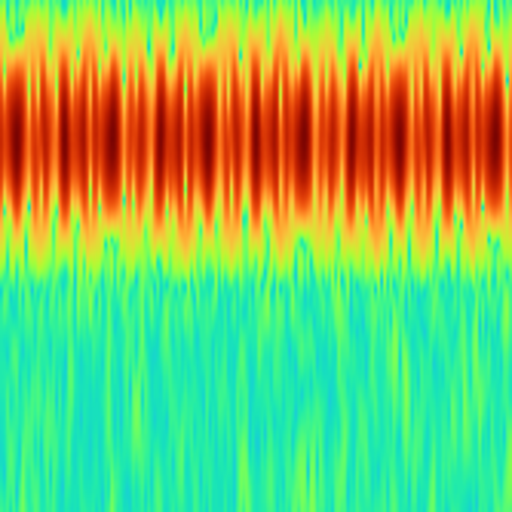
These spectrogram PNGs come from the frozen v1.0.0 TARs. Their source files, TAR members, and public-manifest SHA-256 values were cross-checked; exact parameters are recorded in the machine-readable gallery manifest.
DTUAV-V1-000007Level hover0° · 0 m/s · 25 scatterers
DTUAV-V1-01125230° pitched flight30° · 10 m/s · 25 scatterers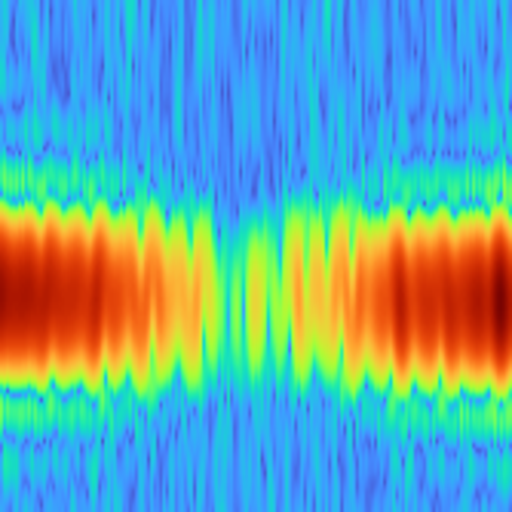
DTUAV-V1-02248845° pitched flight45° · 10 m/s · 25 scatterers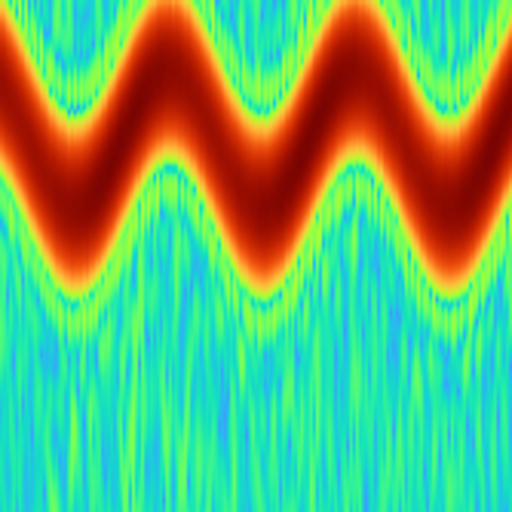
DTUAV-V1-033705Isolated blade baseline0° · 0 m/s · 1 scattererSimulation conditions
The compact class_id remains machine-readable. The table states each condition's tilt, body translation speed, scatterer model, and sample count.
pitch30_v10
pitch30: 30° tilt about the simulation y-axis
v10: translation at 10 m/s along the path
level_v0Full quadrotor point-scatterer model; the body does not translate while its rotors keep turning.
pitch30_v10The full quadrotor model is tilted 30° about the simulation y-axis and translates along its path.
pitch45_v10The full quadrotor model is tilted to 45° while retaining the same 10 m/s translation speed.
single_blade_v0A control model retaining one rotating blade-tip scatterer; it does not represent a single-rotor aircraft.
Format and schema
Every public sample follows the outer NPZ + PNG + JSON protocol. The NPZ payload has two registered tensor schemas, so readers must inspect tensor_schema_id.
| Record type | Count | Description |
|---|---|---|
dtuav-etoile-32key-v1 | 44,948 | The primary v1 tensor structure with 32 array keys. |
dtuav-floor-wall-24key-v1 | 40 | The 24-key structure used by early formal samples; missing arrays were not fabricated. |
| JSON sidecar | 44,988 | Public ID, class, schema, file hashes, and source metadata. |
Generation method
The public reference generator uses the Sionna RT 2.0.1 built-in Étoile scene. Its main configuration is 28 GHz, 20 kHz, and 2,048 snapshots.
Read tilt, body speed, initial state, and a linear or Bézier path.
Compute positions and velocities for body, rotor-center, and blade-radial points.
Solve one-way CIRs from the base station to passive receiver probes.
Approximate the round trip with a weighted coherent sum of squared complex channels, add AWGN, and compute the STFT.
The generator writes NPZ, PNG, and run metadata; the release builder separately creates sidecars, TARs, and integrity records.
After copying the complete configuration, change points_per_blade from 3 to 5 to raise the standard model from 25 to 41 points. Choose a fixed +x line or one four-control-point cubic Bézier segment.
One quadrotor is fixed. Waypoint/CSV input, multi-segment paths, and obstacle planning are not implemented. A new motion class requires code changes and tests, and model changes belong in a new experiment namespace.
Curation and integrity
Three source environments were inventoried read-only before unified content, status, and release-policy checks. Legacy-ID conflicts with different content were retained under different public IDs.
Freeze file, class, size, and hash records.
Identify local copies, invalid, incomplete, and non-release records.
Review duplicates and legacy-ID conflicts by content hash.
Assign DTUAV-V1-000001–044988.
Build and verify 140 deterministic WebDataset TARs.
| Pre-release decision | Count | Action |
|---|---|---|
| Local physical copies | 39,240 | Repeated storage excluded; not independent training samples |
| Zero-byte invalid sample | 1 | Excluded |
| Incomplete records | 1,077 | Excluded |
| Test and non-release records | 5,109 | Excluded |
| Legacy-ID conflicts | 70 groups / 144 records | Distinct content retained with distinct global IDs |
de7fc35cb41af3d9c5b2f52dab5483e3ceb623b3Access and usage
These examples pin the immutable Hugging Face commit, so later main-branch updates cannot silently change experiment inputs.
python scripts/download_dataset.py \
  --output-dir DeepTelecom_Partial \
--start 0 --end 3import webdataset as wds
base = "https://huggingface.co/datasets/KYGOYUAN/DeepTelecom_Partial/resolve/de7fc35cb41af3d9c5b2f52dab5483e3ceb623b3"
urls = base + "/data/v1/shards/shard-{00000..00003}.tar"
samples = wds.WebDataset(urls, shardshuffle=False).to_tuple(
"__key__", "npz", "png", "json"
)Scope and limitations
Project organization
DeepTelecom is organized for research in UAV wireless propagation, ray tracing, and micro-Doppler. This identifies the project organization and does not imply unclaimed institutional endorsement.
Visit the official ISEE websiteCode and documentation in the GitHub repository are Apache-2.0 licensed. This does not automatically grant a separate license for the Hugging Face dataset payload.
The repository currently provides no formal paper citation or DOI. A reference may record the dataset title, v1.0.0, and the immutable HF commit.